The Power of the Dog
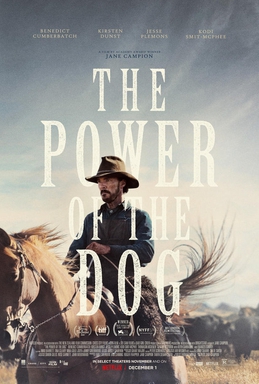
About
Charismatic rancher Phil Burbank inspires fear and awe in those around him. When his brother brings home a new wife and her son, Phil torments them until he finds himself exposed to the possibility of love.
Director
Jane Campion
Writers
Jane Campion, Thomas Savage
Stars
Benedict Cumberbatch, Kirsten Dunst, Jesse Plemons
Date released
09/04/2021
Storyline
Severe, pale-eyed, handsome, Phil Burbank is brutally beguiling. All of Phil's romance, power and fragility is trapped in the past and in the land: He can castrate a bull calf with two swift slashes of his knife; he swims naked in the river, smearing his body with mud. He is a cowboy as raw as his hides. The year is 1925. The Burbank brothers are wealthy ranchers in Montana. At the Red Mill restaurant on their way to market, the brothers meet Rose, the widowed proprietress, and her impressionable son Peter. Phil behaves so cruelly he drives them both to tears, revelling in their hurt and rousing his fellow cowhands to laughter - all except his brother George, who comforts Rose then returns to marry her. As Phil swings between fury and cunning, his taunting of Rose takes an eerie form - he hovers at the edges of her vision, whistling a tune she can no longer play. His mockery of her son is more overt, amplified by the cheering of Phil's cowhand disciples. Then Phil appears to take the boy under his wing. Is this latest gesture a softening that leaves Phil exposed, or a plot twisting further into menace?
Review
Rating: 9/10
Author: Glenn Kenny
This is a beautifully crafted movie with some individual scenes that are some of the tensest I’ve experienced in some time. Ultimately, I did not feel its themes cohering as much as they might. But, as with any Campion film, there’s a lot of meat on its bones. I’ll be continuing to sample the Venice films over the next few days, and my knowledge of what I’m doing here IS getting stronger with every new one.
Drive My Car
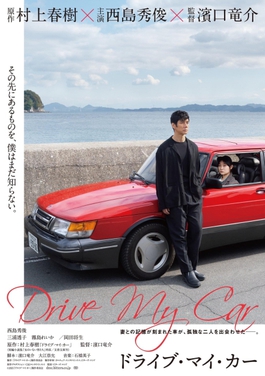
About
A renowned stage actor and director learns to cope with his wife's unexpected passing when he receives an offer to direct a production of Uncle Vanya in Hiroshima.
Director
Ryûsuke Hamaguchi
Writers
Haruki Murakami(short story), Ryûsuke Hamaguchi, Takamasa Oe
Stars
Hidetoshi Nishijima, Tôko Miura, Reika Kirishima
Date released
07/11/2021
Storyline
Two years after his wife's unexpected death, Yusuke Kafuku (Hidetoshi Nishijima), a renowned stage actor and director, receives an offer to direct a production of Uncle Vanya at a theater festival in Hiroshima. There, he meets Misaki Watari (Toko Miura), a taciturn young woman assigned by the festival to chauffeur him in his beloved red Saab 900. As the production's premiere approaches, tensions mount amongst the cast and crew, not least between Yusuke and Koshi Takatsuki, a handsome TV star who shares an unwelcome connection to Yusuke's late wife. Forced to confront painful truths raised from his past, Yusuke begins - with the help of his driver - to face the haunting mysteries his wife left behind.
Review
Rating: 8/10
Author: Rob Aldam
Based on the short story by Haruki Murakami, Drive My Car is a compelling portrait of a man facing up to the ghosts of his past. It’s a film which gradually builds on, and grows into, itself. Taking the viewer on a journey which is full of small and important interactions. It’s exhilarating to watch Hamaguchi at work. Like a master craftsman gradually constructing his masterpiece. Drive My Car is an enthralling piece of cinematic wonderment.
Licorice Pizza

About
The story of Alana Kane and Gary Valentine growing up, running around and going through the treacherous navigation of first love in the San Fernando Valley, 1973.
Director
Paul Thomas Anderson
Writer
Paul Thomas Anderson
Stars
Alana Haim, Cooper Hoffman, Sean Penn
Date released
11/20/2021
Storyline
LICORICE PIZZA is the story of Alana Kane and Gary Valentine growing up, running around and falling in love in the San Fernando Valley, 1973. Written and Directed by Paul Thomas Anderson, the film tracks the treacherous navigation of first love.
Review
Rating: 10/10
Author: Christy Lemire
It’s also wildly unexpected from one moment to the next as Anderson masterfully navigates tonal shifts from absurd humor to tender romance with a couple of legitimate action sequences thrown in between. “Licorice Pizza” meanders in the best possible way: You never know where it’s going but you can’t wait to find out where it’ll end up, and when it’s over, you won’t want it to end. Once the credits finished rolling, I had no desire to get up from my seat and leave the theater, I was so wrapped up in the film’s cozy, wistful spell.