Laini Taylor's latest works

Biography
Taylor was born in Chico, California, grew up as a US military kid in Europe and California, and earned her English degree from UC Berkeley. She currently lives in Portland, Oregon with her husband and daughter. She always wanted to be a writer, and was 35 before she finished her first novel.
Career
In 2004, she wrote a graphic novel for Image Comics, illustrated by her husband, Jim Di Bartolo. Her first novel, Dreamdark: Blackbringer, was published in 2007. The sequel, Dreamdark: Silksinger, was a winner of the 2009 Cybil Award. In 2011, she published Daughter of Smoke and Bone, a young adult fantasy series. The first book in the series was chosen by Amazon as the Best Teen Book of 2011, and the sequel, Days of Blood and Starlight, was also on the list in 2012. In 2017, she published Strange the Dreamer, followed by its sequel Muse of Nightmares in 2018, in which protagonist Lazlo Strange, a scribe and polyglot, journeys to the Lost City of Weep. Taylor created a unique language for this world, which she weaves into the plot. Strange the Dreamer became a Michael L. Printz Honor Book as well as the 2018 Leslie Bradshaw Award for Young Adult Literature.
Latest works
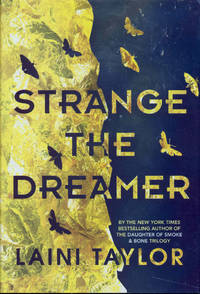
Strange the Dreamer
Author Laini Taylor
Country United States
Language English
Genre Fantasy novel
Publisher Little, Brown (US)
Hodder & Stoughton (UK)
Publication date March 28, 2017
Media type Print (hardcover and paperback), audiobook, e-book
Pages 544
ISBN 978-0316341684
Followed by Muse of Nightmares
Strange the Dreamer is a 2017 young adult fantasy novel written by American author Laini Taylor and the first in the Strange the Dreamer duology, followed by Muse of Nightmares. The story follows Lazlo Strange, a war orphan and librarian in the world of Zosma who undergoes an expedition to the mystic lost city of Weep but discovers it is more than he believed it to be. It was published on March 28, 2017 by Little, Brown Books.
Plot
Lazlo is an orphan by a war that struck his country, who was brought to a monastery by mysterious circumstances. He lives with a mundane existence with the monks, dreaming of finding adventure and uncovering lost cities. In his teenage years and early adulthood, he becomes an apprentice librarian. One day, he encounters a troupe of warriors led by Eril-Fane, the so-called Godslayer. Eril-Fane comes from the lost city of Weep, and is looking for people to help with an unknown problem. Lazlo manages to barter his way on the expedition along with the arrogant godson of Zosma's Queen, Thyon Nero. They encounter many oddities in their trip, and Eril-Fane tells the history of Weep: once a grand city, 200 years earlier it fell to so called gods. 15 years ago, Eril-Fane rose up against the gods and freed the city. Weep still struggles with aftereffects, the nature of which Eril-Fane refuses to reveal before they reach the city. When they do reach Weep, they find a giant floating Citadel shaped like an angel hovers over it. There are four large towers made of the same material as the citadel dropped around the edges of the city. Lazlo and the explorers meet the despondent citizens, who are frightened by the Citadel and the shadow it casts over the city. Lazlo learns more of the history of Weep. Years earlier, blue-skinned "gods" called Mesarthim came to the Seraphim worshiping city. Using their special abilities, magical gifts, they easily took over the city. The citadel was their home and is made of a strange blue metal known as mesarthium. Skathis, leader of the Mesarthim, seems to be the only one able to control the substance. They demanded young men and women be delivered to their citadel, and would return them days, months, or years later, wiped of memories from their time in the citadel. Eril-Fane is forced to spend years with Isagol, goddess of despair. He endures this until he finds his wife Azareen was taken as well. The humans managed to kill the Mesarthim and their spawn, but the Citadel never left.
In the Citadel, several godspawn, the children of the gods, have survived and live unbeknownst to the citizens of Weep. Minya, daughter of Skathis, saved 4 babies during the uprising. They have remained in the citadel for 15 years, supporting themselves using their gifts. Minya has the ability to tether herself to the dead and gains complete control over the ghosts she captures. Ruby can control fire. Sparrow can create growth, and decay. Feral can transport clouds and weather. Sarai, daughter of Isagol, struggles with her role. Under Minya's orders, she uses her power to infiltrate human dreams and torments them with nightmares of those they have lost. Sarai enters Lazlo's dream, but finds he can see her. They develop a quick romantic relationship as they share legends and fairy tales, manipulating their dreams to be blissful and wondrous. The other explorers attempt to find a way to take down the Citadel. One day, Nero discovers that Lazlo's spirit, an essence that flows alongside blood, has an effect on the strange metal. Nero manage to take a sliver from one of the spires on the ground. He confronts Lazlo, who notices that his skin develops gray streaks when in contact with the mesarthium. One of the other explorers, an explosions expert, tries to blow up the same spire. The spires have been keeping the Citadel upright, and it tilts downwards preparing to strike the city. The sudden shift causes the godspawn to tumble and Sarai is thrown off the edge. As the Citadel tumbles, Lazlo uses the mesarthium tower turning his skin blue, revealing he is a godspawn himself. Lazlo is able to correct the citadel and bring the sky back to the city. He crafts beasts to carry him to the Citadel, but Sarai has fallen, impaling herself and dying instantly. She sits above her body as a ghost. Lazlo flies up to meet those who are within the citadel. Minya confronts him and after a battle of wills, she captures Sarai's ghost before it is lost forever. Minya gloats, knowing that now she has full control over both Sarai and Lazlo.
Development
The novel was Taylor's first since Dreams of Gods and Monsters, the third and final book in the Daughter of Smoke and Bone series. The story was written several months after the prior novel had been finished. According to Taylor, the process of finding Strange the Dreamer came from "auditioning all the ideas that have been jostling for space in my head for years...I couldn’t decide...I kept vacillating....I chose the one with a heavy historical component and threw myself into research. Four or five months later, I had piles of notes but the story wasn’t really coming together and I panicked and jumped ship to the other pitch, which was a little more in my comfort zone, being fantasy." The most important aspect to Taylor was a focus on the characters' emotional arcs, with Taylor saying: "for me, it’s all about the emotional journey—or rather, all the characters’ interweaving emotional journeys and how they color each other."
Reception
Strange the Dreamer was nominated for a Michael L. Printz Award for Best Novel in 2017. Kirkus Reviews took note that the novel explored "slavery, trauma, memory, and appropriation" with the conclusion that "lovers of intricate worldbuilding and feverish romance will find this enthralling." Publishers Weekly found the novel to be 'gorgeously written in language simultaneously dark, lush, and enchanting" noting the third act's pacing as "love blossoms between two young people from warring factions, mysteries of identity develop, and critical events unfold in dreams."
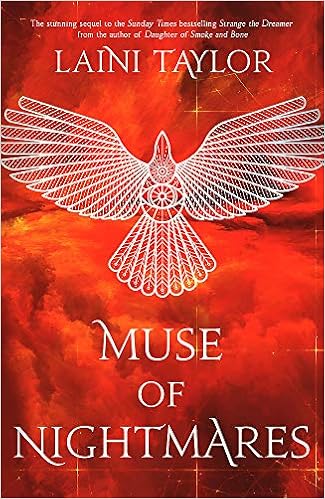
Muse of Nightmares
Country United States
Language English
Series Strange the Dreamer
Genre Fantasy novel
Publisher Little, Brown Books for Young Readers
Publication date October 2, 2018
Media type Print (hardcover and paperback), audiobook, e-book
Pages 528
ISBN 978-0316341714
Preceded by Strange the Dreamer
Muse of Nightmares is a 2018 young adult fantasy novel written by American author Laini Taylor, published by Little, Brown Books on October 2, 2018. The novel is a sequel to Strange the Dreamer and follows Lazlo Strange and the ghost of Sarai, a blue-skinned godspawn, discovering the secrets behind the city of Weep as they stabilize relations between the two worlds of humans and gods. The pair must contest with Minya, the oldest of the godspawn, as Sarai explores her dreams and realizes there is greater tragedy inside then she would have ever imagined.
Plot
Immediately after the events of the first book, Lazlo meets the other godspawn and discovers he is Minya's brother. Minya holds Sarai's ghost as an ultimatum for Lazlo to help them massacre the city of Weep in revenge for Eril-Fane killing their parents. The other godspawn tend to the Citadel, which is still tilted and ready to fall onto the city. At some unknown point in time, sisters Kora and Nova live in a fishing village where they depend on each other for everything including survival and ability to stay resolute while the village's elders treat them cruelly and arrange forced marriages. One day, a giant ship floats over their land, and they rejoice in gods arriving to take them away. They are both taken and examined but Kora is held by them, while Nova is dumped out. Skathis, the ship's captain, indentures Kora and uses the metal mesarthium to turn her blue and awaken her tremendous powers. A vengeful Nova is arranged into a forced marriage but escapes the village, moving painstakingly through the ice to find salvation. Over time, Skathis and the gods turn to domination and use mesarthim as a resource to hold them above everybody else. They indenture more children and travel between worlds through portals in the air. Nova follows the trail through worlds over hundreds of years to recover Kora. It is revealed that the gods, once they arrived over Weep in the Citadel, raped men and women to create more gods, leading to the godspawn. Kora was killed in the massacre by Eril-Fane, who is Sarai's biological father, but managed to send her bird spirit and safely transport Lazlo and other children away from the nursery.
Sarai looks into Minya's dream and sees the tremendous tragedy she faces everyday, after witnessing many babies be killed by Eril-Fane while Minya was only able to carry the youngest children away and hide. Sarai, Lazlo, and the godspawn, who have formed a relucatant alliance with Eril-Fane and Azareen, find that hiding space, which houses a portal between worlds. Nova and other godspawn she befriended arrive to confront them but when she finds out Kora is dead, she is pushed into a murderous rage. A dosed Minya wakes up and uses all of her power to send all the ghosts at them, which ends the battle. Nova tortures Eril-Fane and Azareen by killing them over and over again in a time-loop, bitter that Eril-Fane killed her sister. Sarai convinces Nova to stop, but the citizens of the Citadel are kicked out while Nova takes over. Lazlo is taken hostage by Nova and the Citadel vanishes into another world. Sarai and her companions use a flying contraption to follow them, where they rescue Lazlo. Nova kills herself by falling into an ocean full of beasts.
Afterwards, Minya begins to age normally because all the ghosts she was tethered to were let loose. Lazlo, the godspawn, and several of his explorer friends pilot the Citadel away into other worlds, hoping to find the other godspawns, that where sold by Skathis. Sarai hopes to find someone in one of the 100 worlds, who can make her a new body, because her soul is still tied to Minya (a tie-in to "Daughter of Smoke and Bone"). Eril-Fane and Azareen lead a new Weep and have a son, who they name Lazlo.
Reception
Thea James of Tor.com praised the way that the "plot hinges upon a legacy of chaos and hatred...the struggle of the children, the younger generation that has survived this evil, to either carry on the legacy of pain and blood and death, or to supplant the agony that their parents wrought and live anew." Kirkus Reviews found the novel superior to Strange the Dreamer with note of the ways Taylor "dances between fantasy and sci-fi, indulging in gods, magic, alchemy, and lost desert civilizations" only to subvert these with "spaceships, interdimensional travel, and alien worlds" but realized that the novel could be seen as "ornate, emotionally charged, and poetic—or florid, overdone, overstuffed, and angst-y" depending on the reader. Author Katherine Webber called the novel "a philosophical fantasy adventure, an epic love story, a daring quest that demands to be read and reread and deserves to be remembered forever."